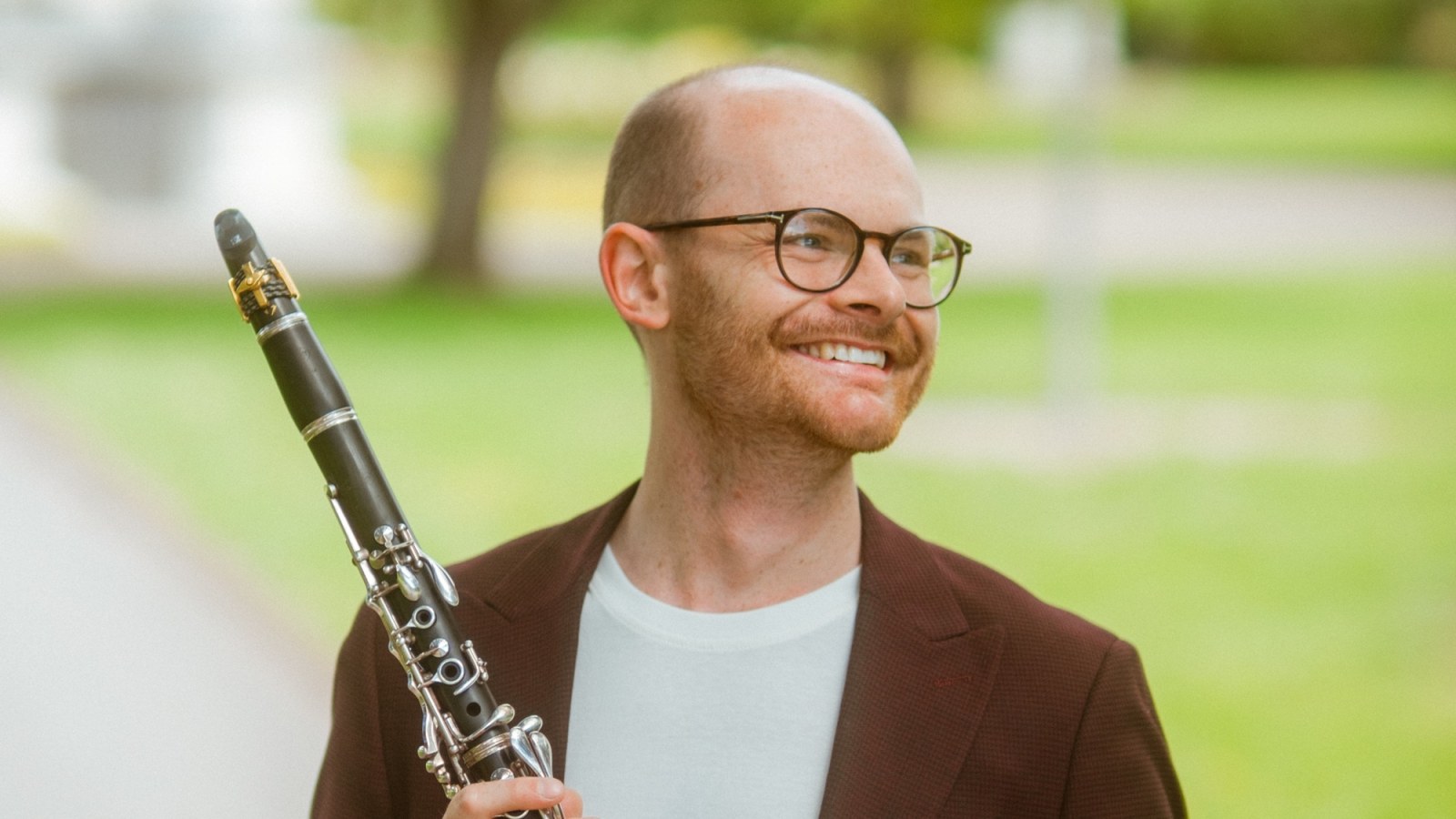
CoMA: Tell us a little about your musical life to date…
Chris Gibbons: I’ve played the clarinet since I was nine and am now lucky enough to play it as a job! I conduct and teach as well and really enjoy a varied schedule. Outside of CoMA, I do a lot of chamber music, orchestral playing and working on new music.
What makes CoMA ensembles different?
The mix of instruments and the approach to music feels quite different from a lot of ensembles. The players are very open-minded and assess a piece for its musical quality and effectiveness. This means it can be tuneful or not, disturbing or calming, violent or peaceful; everything is valid.
How do you choose the music for each term?
I usually have a browse of the CoMA catalogue and choose a few pieces that jump out at me and then try and programme complementary works from there on. If we are working with a composer then their commission might be a good starting point for a concert programme or theme.
Which composers have you discovered by being part of CoMA?
So many! I can’t list them all really, as there are a lot of gems hidden away in the CoMA library. I have also discovered new works by composers I am familiar with already, which is always nice.

What would you most like people to know about contemporary music?
It is enormously varied. Trying to identify what contemporary music sounds like is a bit like trying to describe all food or every colour at once. There are really no rules for how to write music, or what it should sound like.
Tell us about a concert or piece that has been a highlight for you…
We played as part of a concert in the Royal West of England Academy, in a gallery space alongside the artwork. One of our pieces had a solo flute player, isolated from the rest of the ensemble. We placed her at the back of the room and the effect in the acoustic of the gallery was really special.
How do you make everyone feel welcome at CoMA rehearsals and concerts?
I try and spend time getting to know my group in rehearsals, and try to ensure my rehearsal spaces are not too serious. I certainly have to stop conducting sometimes because I’m finding something very entertaining or amusing! At concerts, I do my best to explain a little about each piece to the audience. I often tell them that I hope they hear something they like, but also something they don’t. If everyone enjoyed every piece of music equally, we wouldn’t have much to talk about after a concert.
What challenges do you face as a group in learning and performing the pieces and how do you overcome them?
A lot of the pieces in the CoMA library are musically quite complex, or simply require a high level of bravery to perform. I try and help people feel relaxed in rehearsals so they can perform with as few inhibitions as possible. The concert marks the end of the hard preparatory work and should be an opportunity to enjoy the pieces, for the performers as well as the audience.
What’s most rewarding about your role?
Meeting people with a real enthusiasm for contemporary music is really enjoyable. Helping them to deliver it to an audience in a confident and assured way is even better. I love the learning process that we all embark on with a new piece, from first read through to performance.
Why would you recommend people join a CoMA ensemble?
CoMA ensembles offer the chance to approach and experience music in a different way to a lot of groups. It doesn’t matter what instrument you play, you just have to be enthusiastic and have a strong desire to play as best as you can. It is a great chance to meet other musicians in your area and perform interesting repertoire. You will also be contributing to the immensely important task of keeping classical music alive and relevant.
If you had the chance to learn another instrument and play it in a CoMA ensemble for six months, what would you pick?
Probably the cello. I have never played a bowed string instrument to any great extent and would like to explore the different sounds the instrument can make. If I was really terrible I could also just sing in the bits I couldn’t play!
To find out more about CoMA Bristol and all the other groups, visit our Ensembles page.